Let’s be honest. When you’re renovating or investing in property, every dollar needs to work hard. You want improvements that not only make the space better to live in but also boost the bottom line come sale or valuation day.
Kitchens sell houses. Bathrooms add value. Fresh paint is a no-brainer. But here’s something that doesn’t get enough attention from property investors and renovators: the humble retaining wall.
If your property has a slope, an awkward hill, or any kind of challenging terrain, a professionally built retaining wall isn’t just a landscaping feature. It’s a strategic investment. It adds usable square metres, solves expensive problems, and signals to future buyers that this property has been cared for properly.
Let’s break down the numbers and the logic.
The Hidden Liability of an Unstable Slope
First, let’s talk about what happens when you don’t address a slope problem.
An eroding hillside, a collapsing garden bed, or a DIY wall that’s starting to lean—these aren’t just eyesores. They’re red flags. Property inspectors notice them. Engineers raise eyebrows at them. And savvy buyers either walk away or lowball you, knowing they’re inheriting a problem.
Consider the risks:
- Soil erosion can undermine foundations, driveways, and fences over time.
- Poor drainage leads to water pooling near the house, which means damp, mould, and potential structural issues.
- Landslip potential is a genuine concern on steeper sites, and it’s the kind of thing that makes lenders nervous.
An unstable slope is a liability. It’s a question mark hanging over your property’s value. And questions marks don’t help at auction.
Turning a Problem into an Asset
Now flip the script. What happens when you invest in a professionally engineered retaining wall?
Suddenly, that unusable slope becomes a flat, functional space. A place for kids to play. A patio for entertaining. A vegetable garden. Extra off-street parking. Even room for a small studio or shed.
You’re not just fixing a problem. You’re creating value.
A professionally engineered retaining wall does several things for your property’s bottom line:
1. Increases Usable Land Area
On a sloping block, a surprising percentage of your land might be functionally useless. Too steep for a trampoline. Too angled for outdoor furniture. Too awkward for anything but weeds.
Terraced retaining walls transform that dead space into usable square metres. And in property, usable space equals value. A flat backyard isn’t just nicer to live in; it’s a selling point that competing properties without it simply can’t match.
2. Solves Drainage Issues
Water is the enemy of every building. A properly designed retaining wall includes drainage systems—gravel backfill, ag pipes, strategic outlets—that manage stormwater effectively. No more soggy patches. No more water pooling against the foundation. No more mysterious damp smells in the basement.
Buyers will pay more for a dry, well-drained property. It’s peace of mind they can feel.
3. Provides Visual Polish and Curb Appeal
Never underestimate the power of a finished look. A beautifully constructed retaining wall with integrated planting, clean lines, and quality materials signals that this property has been thoughtfully improved. It’s the difference between a yard that feels “raw” and one that feels “done.”
Curb appeal sells. And retaining walls, especially those that incorporate custom retaining wall steel reinforcement and finishes, can be genuinely beautiful features that elevate the entire property.
4. Prevents Future Expensive Problems
Here’s where the investment maths gets really compelling. A properly built retaining wall is an insurance policy against much larger costs down the track.
Preventing erosion that could undermine a driveway. Stopping land movement that could crack a foundation. Managing water that could cause subsidence. These are problems that cost tens of thousands to fix. A retaining wall, professionally designed and installed, stops them before they start.
That’s value you may never see directly—because the disaster never happens. But it’s value nonetheless.
What “Professional” Really Means
Not all retaining walls are created equal. And for property investors, cutting corners here is a dangerous game.
A DIY wall from hardware store blocks might look fine for a season or two. But soil moves, water flows, and gravity works 24/7. Eventually, inadequately engineered walls fail. They lean. They crack. They collapse.
And when that happens, you’re not just repairing a wall. You’re cleaning up a mess. Possibly dealing with damage to neighbouring properties. Potentially facing liability issues.
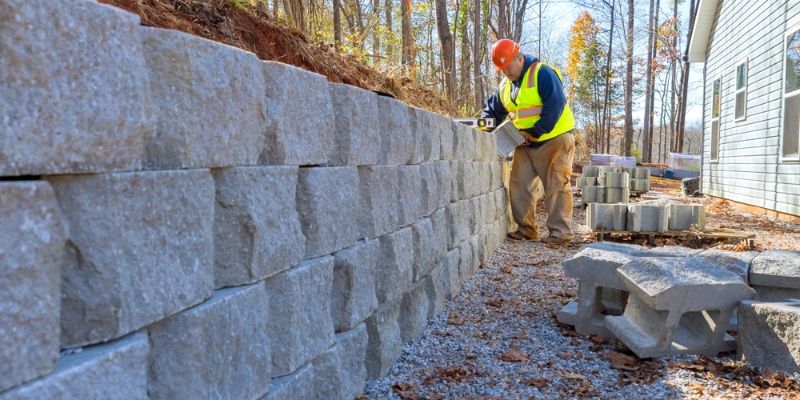
A professional, engineered solution—typically steel-reinforced concrete sleepers designed for your specific site and soil conditions—costs more upfront but saves dramatically over time. It’s built to engineering standards. It has proper drainage. It uses materials that last.
It’s the difference between an expense and an investment.
The Resale Conversation
Let’s talk about what happens when you sell.
A potential buyer walks onto your property. They see a flat, beautiful backyard with mature plantings, a patio area, and a sturdy, attractive retaining wall that looks like it could hold back a small army. What do they think?
They think: This place has been looked after. The hard work is done. I can move in and enjoy it.
Now imagine the alternative. They see a steep, weedy slope with a tired, leaning timber wall that’s clearly on its last legs. What do they think?
They think: That’s going to cost me. How much? Can I negotiate down? Should I just walk?
Which property do you think sells faster? For more money? With fewer conditions?
Making the Smart Investment
If your property has a challenging slope, don’t treat it as a problem to ignore. Treat it as an opportunity to add genuine, lasting value.
Start with a conversation with a specialist. With RWSteel you can get a professional assessment of your site. Understand what’s possible for your budget and your goals. Then build something that will serve the property—and your bottom line—for decades.
The right retaining wall doesn’t just hold back soil. It holds up value.